
Community Disaster Management Committees (CDMCs), local volunteers, and task forces are the backbone for ensuring safety before, during, and after disasters. Before floods occur, they advocate for preparedness plans that reflect community priorities, help raise awareness and work for early action. During disasters, they coordinate with local authorities to disseminate early warnings, help mobilize volunteers and support in search and rescue as well as response activities. Post-disasters, they help to keep a record of impacts, facilitate recovery and relief and also in rehabilitation.
In collaboration with government agencies and development partners, CDMCs identify safe shelters and educate communities about them. Before monsoons occur, they check if all the lifesaving equipment like life jackets, ropes, boats, sirens, and first-aid supplies are in place and disseminate messages about evacuation and rescue routes. Designated members remain active throughout monsoons and communicate closely with local stakeholders.
Earlier, we had no knowledge about how to protect ourselves from disasters. Now, we are well informed. To understand flood situations, we regularly receive information from river gauge readers in upstream areas, officials from the Municipal Disaster Branch, and directly from the Department of Hydrology and Meteorology.
Basanta Sunar, a CDMC member from Kutiyakabar
Early warnings that save lives
Simple, timely early warning systems have proven to be lifesaving. Communities receive flood updates throughout the day through coordination with local authorities, ward representatives, and disaster management offices. At night, community leaders take turns staying on alert.
Early warnings are disseminated through microphones, sirens, phones, WhatsApp groups and social media. Local representatives in Dodhara Chadani have created a WhatsApp group which has been a life saver. All of these ensure that the messages reach communities as early as possible and families are evacuated on time and safely.
Practicing for the real thing
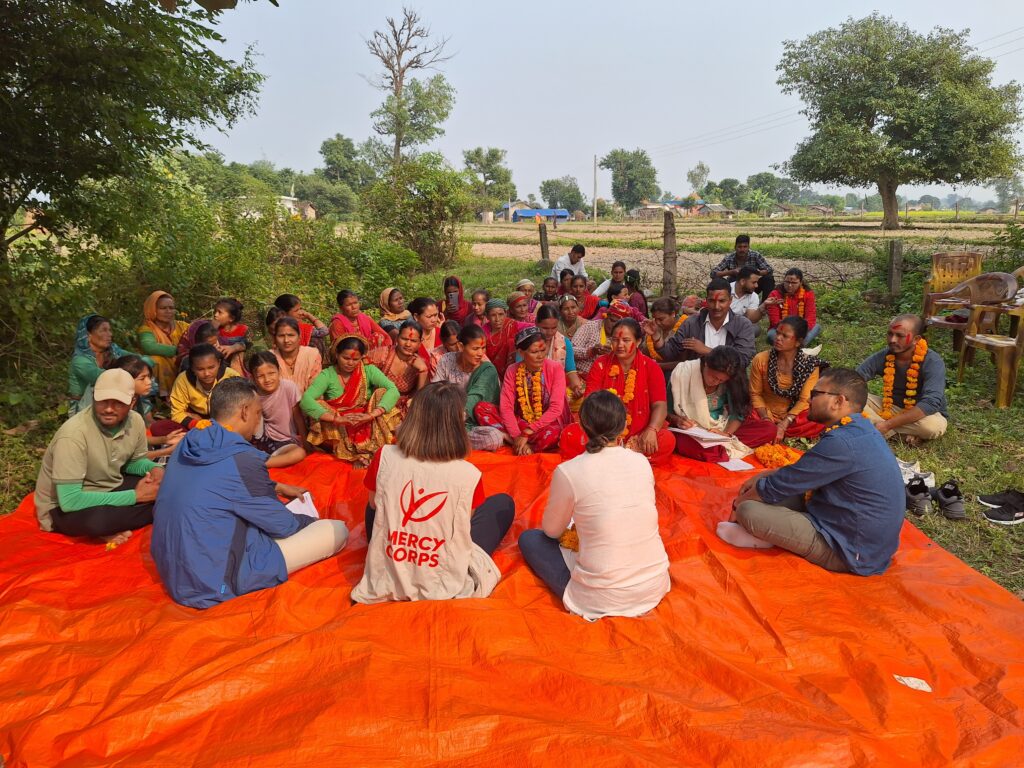
Simulation and mock drills are the tools that really help in preparedness. Before floods, communities conduct drills that simulate real scenarios. Households gather at pre-identified safe locations, evacuation routes are reinforced, and shelters are tested.
CDMC officials and task force members have a clear role to do. They inspect rescue equipment, activate sirens and ensure that all people get the messages. Vulnerable groups such as pregnant women, infants, children, and elderly people are prioritized during evacuation, and basic first aid is practiced.
Repeated drills have made preparedness a routine safety measure, not an emergency reaction. Nearby communities, including Gahiro Tole and adjoining areas, have begun replicating these practices. Experience shows that trained individuals are much calmer, more prepared and help in reducing panic, improving coordination and minimizing loss of life and property.
Partnerships that strengthen resilience
Local governments have an important role to play. From addressing community demands to providing relief materials and arranging shelter and food, all these efforts require coordination. NGOs and development partners support these efforts through coordination, technical assistance, and capacity building, ensuring that community ideas are strengthened rather than substituted.
Earlier, we didn’t know what to do when a flood came. Now, everyone knows their responsibilities, so there is more preparation than fear.
Chandra Sunar, a CDMC member from Patarkhalla
Women leading the way
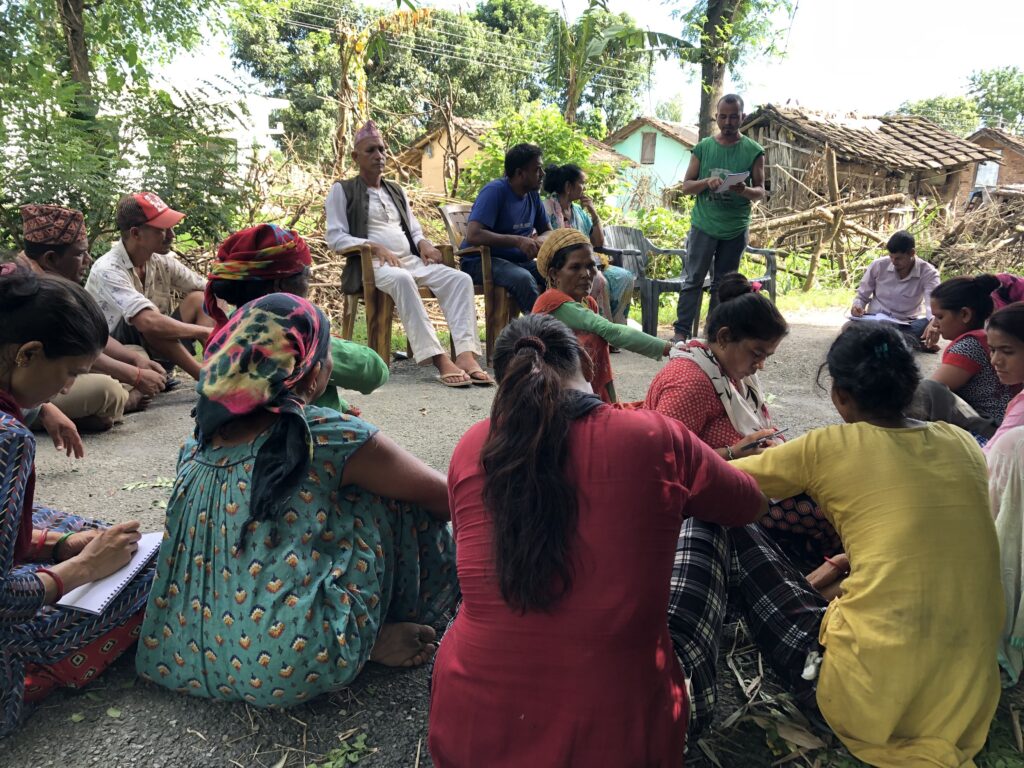
With men migrating, women’s participation and leadership have become a pillar of community disaster management. Women are leading most of the task force and this has resulted in robust female leadership and more efficient local disaster management.
The CDMC Operational Guidelines promote women’s involvement through inclusive participation. It ensures that inclusion is guaranteed at all levels in the formation of committees, meaning that no one is left behind.
Lessons from the ground
The experience of Dodhara Chandani and similar communities offers clear lessons:
- Strengthening community capacity turns fear into readiness.
- Early warning systems and safe shelters reduce loss and damage.
- Collective action and coordination are essential.
- With supervision, partnership, and empowerment, communities can create lasting resilience.
Preparedness does more than protecting lives and property, it restores confidence and hope. As climate risks intensify, investing in community-led disaster preparedness is not optional; it is essential. When communities are empowered to act early and act together, resilience truly begins from the ground up.
This article was originally published by myRepublica on 3rd February 2026. You can view the original here.
Comments