
Today marks the 5th edition of Heat Action Day, a global moment for raising awareness of one of the world’s deadliest climate hazards: extreme heat. Heat risks are rising worldwide, and heat Early Warning Systems are essential to anticipate dangerous heat, helping governments, communities, health systems, and other sectors prepare and act early. New global analysis by the Zurich Climate Resilience Alliance and the Red Cross Red Crescent Climate Centre (RCCC) shows that these systems are expanding rapidly worldwide, but also remain highly diverse.
More than half of countries worldwide report issuing some form of extreme heat warning. These can save lives: the WMO and WHO estimate that expanding heat-health warning systems to countries that currently lack them could prevent nearly 100,000 deaths annually. Yet despite this rapid growth, major gaps remain in how heat warnings are designed, communicated, and translated into action.
Understanding gaps and opportunities for heat EWS
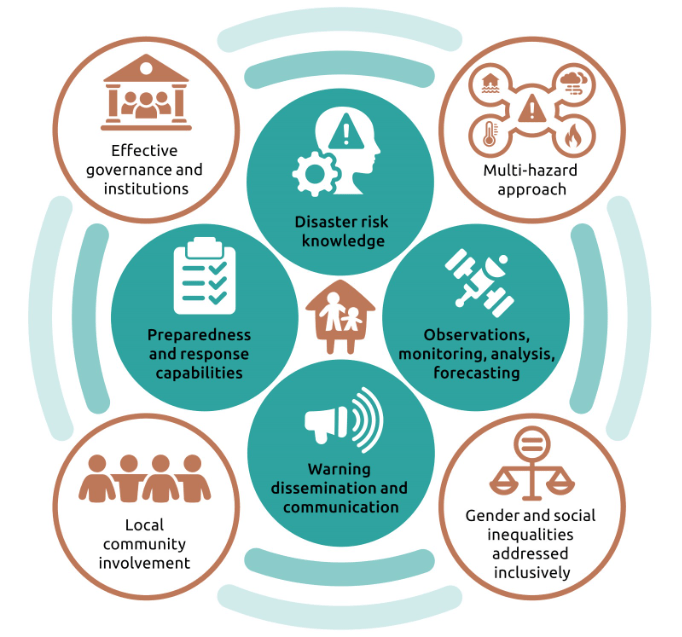
To better understand the current landscape of heat Early Warning Systems, and the gaps that need to be addressed, the Alliance, in collaboration with the RCCC, conducted a global study to explore how heat Early Warning Systems are evolving worldwide and where critical challenges remain. The report reviews global trends across the four pillars of Early Warning Systems: risk knowledge, forecasting, communication, and preparedness. To complement the global level assessment, eight Alliance countries experiencing heat impacts were reviewed in more detail, examining heat Early Warning Systems in Bangladesh, Jordan, Mexico, Nepal, Pakistan, Philippines, Senegal, and Vietnam.
The need for improvements in how heat is measured
Heat risk knowledge remains heavily focused on mortality and health, but extreme heat also affects livelihoods, mental health, productivity, infrastructure, agriculture, ecosystems, and education. Expanding locally relevant, cross-sector data is essential to better understand who and what is at risk, where, and why.
Forecasting heat itself is not the main challenge – temperature is relatively predictable several days in advance. However, relevant metrics vary by context; while many countries use air temperature, others must account for humidity, which shapes real-world impacts. For example, Senegal applies temperature thresholds in dry regions and heat index measures in humid ones, highlighting that effective warning systems must reflect local climatic conditions.
Overcoming communication challenges
Heat is harder to communicate than other hazards because it is largely invisible and often associated with leisure rather than risk. Messages tend to focus on weather conditions without clearly explaining health impacts or practical actions. Even when warnings are issued, they may not reach those most at risk such as women, the elderly, people with disabilities or chronic illnesses, or outdoor workers —especially when extreme heat disrupts power or communication systems.
For example, in Mexico heat warnings are disseminated through a multi-actor communication system including map-based products and bulletins, video-based communication formats, and translated into Indigenous languages for specific regions. Visual formats, infographics, and colour-coded alerts are increasingly used at the city level to link temperature ranges with specific times of day and response actions, aiming to make heat warnings more understandable and actionable for non-specialist audiences.
Effective communication therefore depends on trusted local intermediaries, such as community health workers, volunteers, schools, and local networks, to deliver accessible and actionable information.
The need to focus on those most at risk
Extreme heat risk is shaped by social inequalities, such as gender, age, and income status, so impacts vary widely. For example, people particularly at risk from heat include older adults, people with chronic illness, pregnant women, children, outdoor and informal workers, and people living in poorly ventilated or overcrowded housing., It’s therefore vital to ensure that risk information and monitoring reflect different needs and constraints, and that communication reaches everyone regardless of age, gender, location or other variables. This includes using disaggregated data, tailoring messages to diverse audiences, and linking warnings to practical support.
Yet many systems still struggle to turn vulnerability into targeted action, particularly in low-resource settings, where poverty, gender roles, disability, and geography limit people’s ability to respond. A stronger focus on those most at risk is essential to deliver equitable protection.
Warnings directly triggering action, support, and resourcing
Warnings alone do not protect people unless they trigger concrete measures such as preparing hospitals, opening cooling centres, adjusting work schedules, or scaling up water and energy support. Therefore, heat warnings must be linked to concrete and fully resourced Heat or Heat-Health Action Plans , which for example in Europe, have shown to reduce heat-related mortality by 25%.
In Dhangadhi Municipality in Nepal, heat alert thresholds are directly linked to predefined spatially and socially targeted protocols based on local assessments, supporting targeted action including strengthening hospital capacity, activating cooling centres, implementing communication campaigns, conducting outreach and support in high-risk areas, enforcing protection for outdoor workers, and ensuring water and electricity supply to critical facilities. Yet many countries that do have warnings, and lack such plans or resources to implement them. For example, a global study found zero of such plans for the entire African continent.
Ways forward to improve heat Early Warning Systems
The recent expansion of heat Early Warning Systems worldwide is an important and encouraging step. But heat is intensifying rapidly and is putting pressure on existing systems. Even in countries with long-standing heat Early Warning Systems and Heat Action Plans, extreme heat continues to cause major societal and health impacts.
Given the scale of these impacts, it is crucial both to expand heat Early Warning Systems to countries that remain unprotected and to strengthen existing systems by improving communication, preparedness planning, and coordination across sectors, so that heat warnings translate into meaningful early action that protects lives, livelihoods, and those most at risk.
For more information on heat Early Warning Systems, see:
- Understanding the global landscape of heat Early Warning Systems
- Our Early Warning Systems resource library
- Our Urban Heat resource library
- Case studies on the current status and recommendations for Heat Early Warning Systems in:
Coming soon:
- Case studies from Bangladesh, Nepal, Pakistan, Senegal, Vietnam on the current status and recommendations for Heat Early Warning Systems.
- A policy brief highlighting recommendations for key actors in the heat and EWS space (coming September 2026).
Comments