
As climate risks such as floods, typhoons and extreme heat intensify across the Philippines, strengthening resilience requires more than responding to disasters after they occur. It demands stronger cross-sector coordination, science-informed decision-making, and communities that are supported to lead on-the-ground solutions. These themes are central to the work of the Zurich Climate Resilience Alliance and shaped the Multi-Stakeholder Forum on Climate Resilience organised by the Philippine Red Cross (PRC) and Plan International, together with the International Federation of Red Cross and Red Crescent Societies (IFRC).
Advancing locally led action
While Climate Change Adaptation (CCA) and Disaster Risk Reduction and Management (DRRM) systems in the Philippines have improved in recent years, critical gaps remain. Siloed institutional approaches persist, limiting the ability to address cross-sectoral risks such as flood-related disease outbreaks. Meaningful community participation in climate risk planning is uneven, with varying levels of inclusiveness, often shaped by local capacity and leadership, and with vulnerable groups not always adequately represented. In this context, Plan International and the PRC/IFRC are advancing locally driven resilience efforts across multiple sites while building collective momentum to influence action at the national level.
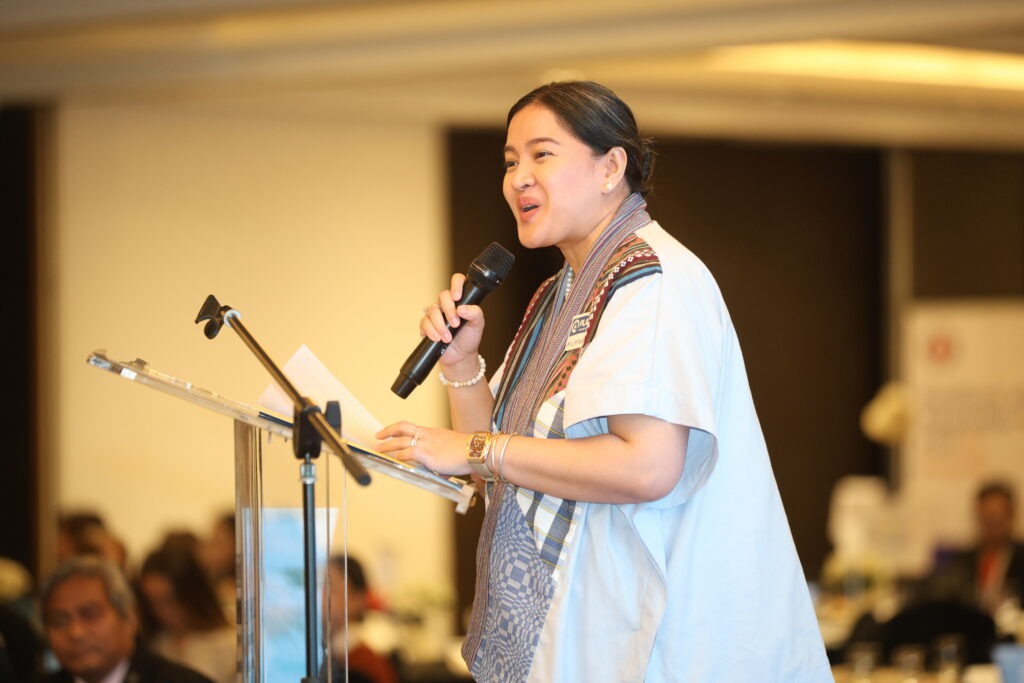
In a country at the frontline of climate risks, resilience cannot begin after disaster strikes. It must be built deliberately, systematically, and inclusively long before the next hazard. Together, as the Alliance, we are working to strengthen local systems, invest in community-based capacities, and foster grassroots leadership.
Ms Pebbles Sanches-Ogang, Executive Director of Plan International Pilipinas
The power of collaboration in building resilience
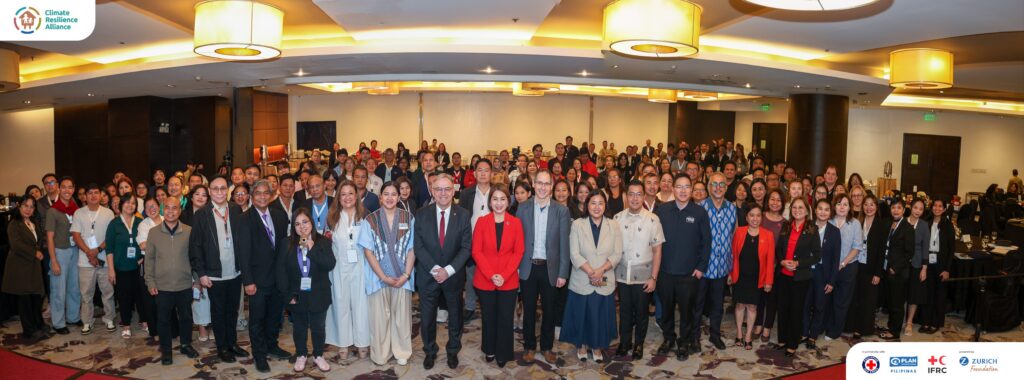
Convening these stakeholders is a key part of making this work a success. The forum brought together key actors from national and local governments, meteorological services, research institutes, humanitarian organisations, civil society partners, and local communities. By creating space for such dialogue, Plan International and PRC aims to strengthen coordination, identify shared goals and opportunities for collaboration, and support more collective action on building resilience to climate hazards.
It is important to have platforms where stakeholders from different walks of life come together and offer solutions at the intersection of the challenges we face. Sustained dialogue like this helps move us beyond working in silos and toward collective action.
Dr Gwendolyn Pang, Secretary General of the Philippine Red Cross
Turning evidence into action
The forum agenda reflected the Alliance’s commitment to translating evidence into action. Keynote presentations and panel discussions highlighted the Philippines as a climate risk hotspot and underscored the need for coordinated, multisectoral, and community-centred approaches to address interconnected risks such as flooding and extreme heat. Plenary sessions showcased stories of change from Pasig and Navotas City, demonstrating how local actors are translating policy into practice, while breakout discussions focused on inclusive planning, community participation, partnerships, and emerging urban risks.
Throughout the dialogue, participants underscored that disasters do not create vulnerabilities; they magnify existing gaps, including in funding, capacities, and social protection systems. Addressing these risks, therefore, means placing the most vulnerable at the center of climate resilience enhancing efforts.
Climate risk is no longer something we respond to after the fact. It is a condition that shapes whether decisions work or fail in the first place. We have better data now. Better plans. Better access to finance than we did a decade ago. That matters. What will matter more is whether we allow that evidence to change how decisions are actually made earlier, across systems, and before losses harden into outcomes.
Beatriz Anne Cortes-Faustino, Division Chief, Strategic Partnerships, Climate Change Commission
Another priority raised was the need to move beyond top-down approaches by ensuring that communities are actively involved in shaping adaptation strategies. The Climate Resilience Measurement for Communities (CRMC) framework is a key component of Alliance work in the Philippines. In 2025, PRC, IFRC and Plan International conducted baseline studies using focus groups, key informant interviews, household surveys, and secondary data analysis to assess community experiences, capacities, and vulnerabilities related to floods, storms and extreme heat.
This approach reflects the ongoing work of PRC, IFRC and Plan International , which emphasizes localization and participatory mechanisms. Communities, particularly vulnerable populations, such as women, youth, the elderly, people with disabilities, are co-designing solutions such as preparedness planning for families, locally led and inclusive DRRM planning and emergency drills and simulations, ensuring solutions are practical, inclusive, and sustainable. Beyond programme design, the data is also shared with communities to strengthen local advocacy and communicated to decision-makers through forums and dialogue platforms such as this one.
Driving a national movement for resilience
Together, these discussions highlighted a critical reality: climate resilience cannot be achieved by any single institution alone. It requires collaboration across climate actors and a shift from reactive disaster response toward risk reduction, anticipatory action, and sustained preparedness investments.
For Plan International and PRC, convening forums such as this is not an end in itself. They are part of a broader effort to strengthen coordination across sectors, promote evidence-informed decision-making, and support local governments and communities to work together on inclusive, locally responsive climate resilience. As climate risks become more complex, creating opportunities to align priorities, build partnerships and encourage collective action will remain an important part of scaling effective solutions and supporting communities to adapt and thrive.
To learn more about the Alliance’s work in the Philippines, visit our country page.
Comments