
In the Kanchanpur district of Nepal, riverine communities face recurrent floods and riverbank erosion, which damage agricultural land and impact on community livelihoods. Traditional flood control methods such as concrete spurs or river dredging disrupt ecosystems and require high maintenance costs. On the other hand, nature-based adaptation and resilience approaches such as bio-dykes offer a sustainable, community-driven alternative to reduce the risk of riverbank erosion and riverine floods.
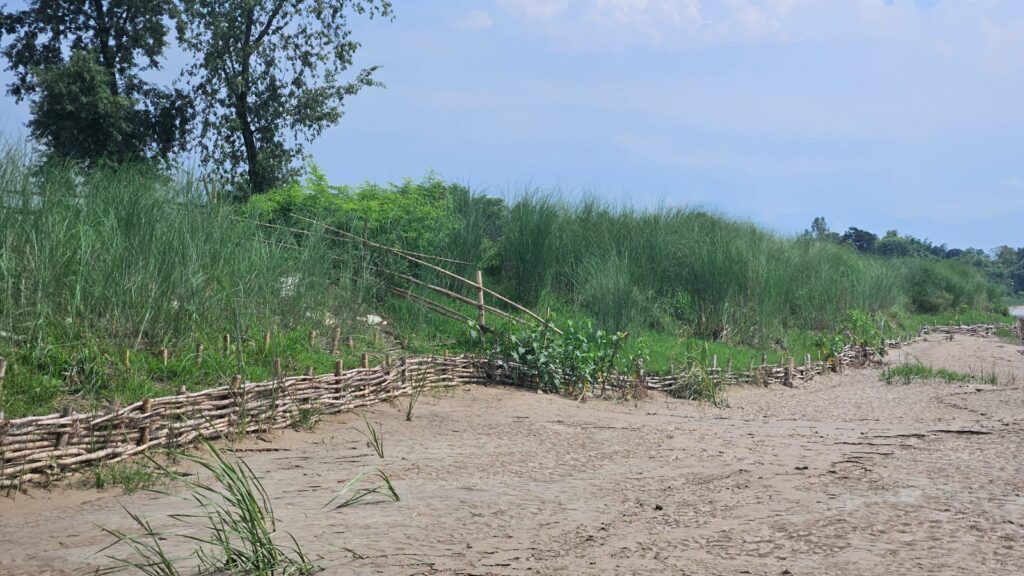
Heavy and incessant rainfall can turn rivers in Nepal’s southern plains into fast-flowing floods that destroy the livelihoods of people living along the riverbanks. The increased flow and speed of the river wash away soil from the riverbeds and banks, causing the riverbanks to fall into the flowing water. This ‘riverbank slumping’ is a major cause of erosion and riverbank degradation, increasing the risk of floods for adjoining farmlands and riverine communities by creating potential entry points for floodwaters.
Communities living in Nepal’s Doda River floodplain, in Kanchanpur district, face this problem every monsoon season. 86 households in the Tilki community of Shuklaphanta Municipality, and 114 households in Nand Gau community of Laljhadi Rural Municipality, have no alternative but to face the floods every year. Agriculture is the primary source of income, and riverbank erosion increases the risk of farmlands flooding, with severe impacts on local livelihoods.
Working with nature to reduce flooding
Traditional flood control methods such as gabions (mesh cages containing rocks or other solid material) and concrete embankments often require high construction and maintenance costs and can disrupt ecosystems and the natural processes along riverbanks. Nature-based approaches provide an alternative, sustainable approach to reducing flood risk, while simultaneously enhancing biodiversity, maintaining ecosystem services, and providing co-benefits to people and nature. Nature-based approaches for adaptation and resilience draw inspiration from natural ecosystems to address environmental and social challenges.
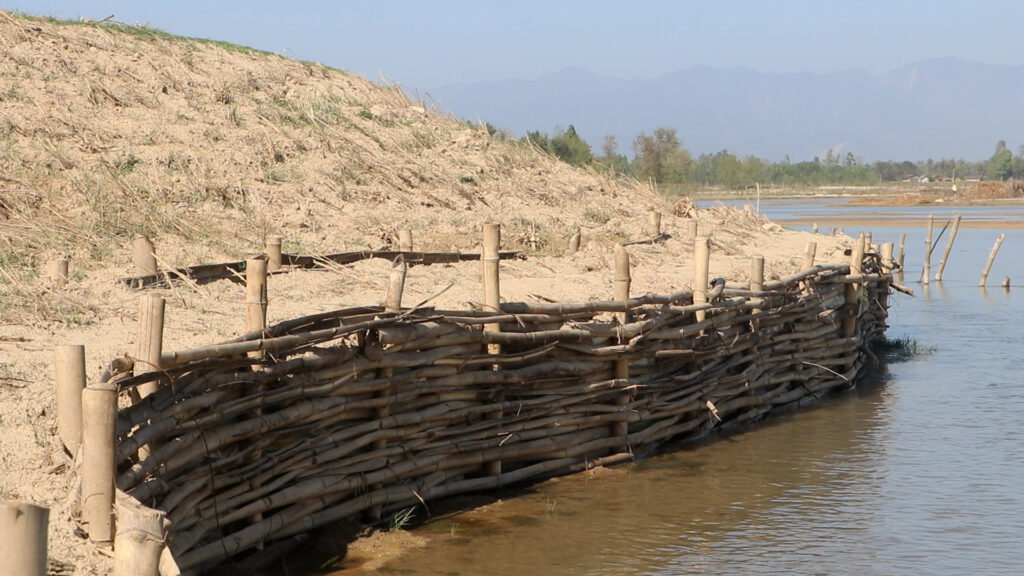
Unlike concrete structures, vegetated embankments, such as bio-dykes, work with nature rather than against it. They stabilize riverbanks, reduce erosion, help recover degraded riverbanks, and allow water to flow naturally while minimizing flood risks. Practical Action has been working with riverine communities in Nepal to understand their risk and build resilience to riverine floods, using the Climate Resilience Measurement for Communities tool. Since 2008, Practical Action has supported the design and construction of bio-dykes based on a technical design manual developed originally by Practical Action and translated into Nepali for local use.
Before, the wattle fences [weaved from flexible branches] we built along the riverbank every year were always swept away during floods. Preservation of Environment and Social Welfare of Nepal, a partner of Practical Action, discussed the Climate Resilience Programme with us. After extensive discussions with the community, we agreed to build a bio-dyke following the instruction manual prepared by Practical Action. The bio-dyke is in place and has protected us from this year’s floods. We feel safe.
Ram Ashray Rana, leader of the Itaha Community Disaster Management Committee in Tilki, Kanchanpur district
Bio-dykes use locally available and natural materials such as sand and soil, and local flora such as bamboo and vetiver grass. The construction of a bio-dyke requires less expert engineering knowledge than a concrete structure, and because it uses locally available materials and techniques similar to indigenous construction practices, it can be built and maintained by community members themselves, even in remote locations. Planting deep- and mesh-rooted vegetation – such as vetiver grass and durva (also known as dubo and bermuda grass) – on bio-dykes can improve the drainage of surface water and the shear strength of the bio-dyke’s soil, which in turn supports slope stability and strengthens the bio-dyke itself.
The multiple co-benefits of bio-dykes for riverine communities
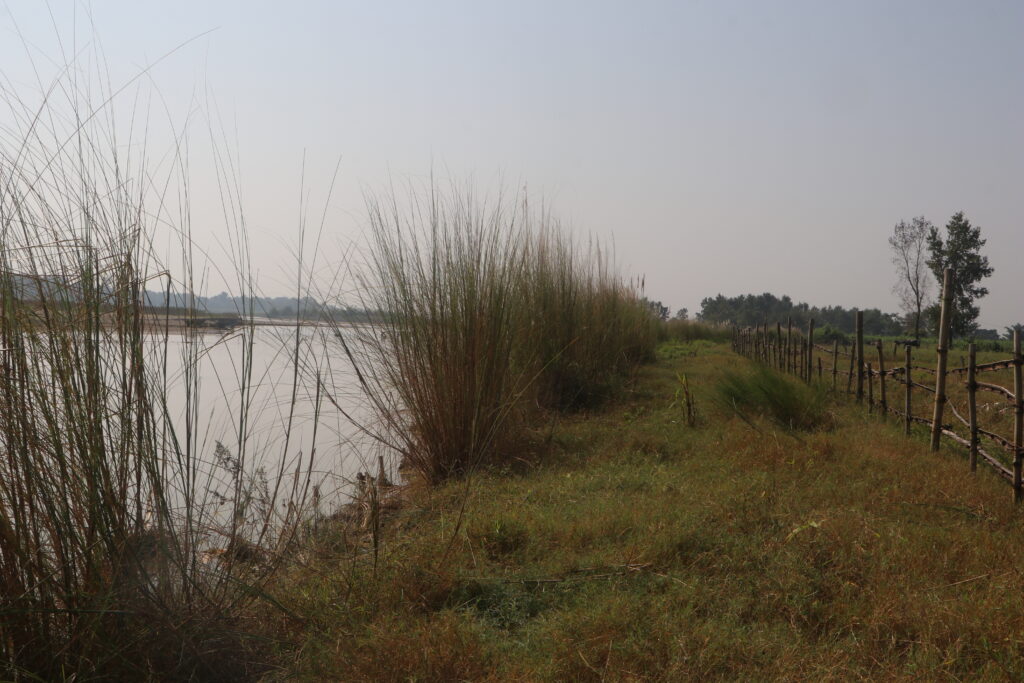
Bio-dykes offer a range of advantages over conventional flood control methods. Over time, the bio-dyke becomes part of the local ecosystem by supporting the recovery of degraded riverbanks, improving local biodiversity and soil health, and reducing flood risk.
Planting of flora with a monetary value – such as fodder crops, fruit trees, rattan, bamboos, vetiver grass, and medicinal crops – as part of the bio-dyke can also provide an opportunity to communities for income generation. The flora planted on bio-dykes not only supports its structural integrity but also provides socio-economic benefits to communities. In addition, if vegetation that support community livelihoods are planted on the bio-dyke, community members will use and access the bio-dyke regularly, which will help ensure that the bio-dyke’s condition is monitored regularly and repaired early.
The bio-dyke built together with the community is becoming very strong and we hope it will protect us from the Doda River flood. We are confident that this strong bio-dyke will not disappoint us.
Mangal Prasad Chaudhary, Tilki community member
Nature-based infrastructure will grow and gain strength over time, unlike grey infrastructure, which starts ageing once it is completed and requires skilled human resources for construction and ongoing maintenance. The living components of the bio-dyke adapt to provide structural integrity and can be repaired using local resources. A bio-dyke system also holds the potential to contribute to carbon sequestration, making them a climate-smart solution.
The Zurich Climate Resilience Alliance is working with nature to build community resilience to flood risk and other climate-related hazards. Here are some other examples:
Comments