












Early Warning Systems
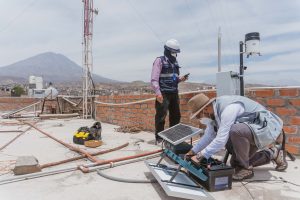
Early Warning Systems (EWS) help those at risk of floods, heatwaves and other climate hazards to take meaningful and impactful action to keep themselves and their assets safe – yet they remain absent from many at-risk communities. In others, the information provided by the EWS is hard to access or understand, leading to costly inaction. As well as supporting communities in developing and maintaining inclusive systems, the Zurich Climate Resilience Alliance is working with partners to achieve sustainable change at scale in EWS, so that they deliver essential services for the most vulnerable.
Adaptation Governance
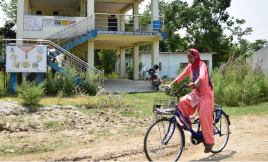
Climate adaptation governance refers to the set of actors, policies, processes, and institutions through which societies adapt to the impacts of climate change. It encompasses a wide range of decisions, strategies, and actions taken by governments, communities, businesses, and other stakeholders to adapt to changing climate conditions and reduce vulnerability to its effects. At the local, provincial, national and global levels, the Zurich Climate Resilience Alliance works with multiple stakeholders to influence effective government adaptation policy and practice. To achieve this we focus on:
- Supporting effective adaptation policies, strategies, and plans
- Advocating for and influencing access to increased amounts of high-quality adaptation finance
- Increasing technical expertise and capacity
- Enabling stronger collaborations and partnership working
Heat

Incidents of extreme heat are becoming more frequent, more intense, and more deadly. Infants, older people, and those with chronic health conditions are particularly vulnerable to heatwaves, especially those in cities. Extreme heat also has significant consequences for other areas of society, such as reduced economic output, strained health systems, and rolling power outages.
Drawing on over a decade’s experience of identifying and managing flood risks, and using a data-driven, collaborative approach to determine the most appropriate interventions, the Zurich Climate Resilience Alliance is working to reduce the impacts of extreme heat events, in both rural and urban communities.
Urban

More than half of the world's population lives in urban areas, projected to rise to two-thirds by 2050. Rapid and unplanned urbanization increases the risk of exposure to disasters, diseases and the impacts of climate change, especially among the poorest and most vulnerable. The Zurich Climate Resilience Alliance is building on existing urban-based flood resilience programmes to support communities, authorities and civil society organizations looking to addressing climate resilience challenges specific to urban contexts.
Nature-based Adaptation and Resilience
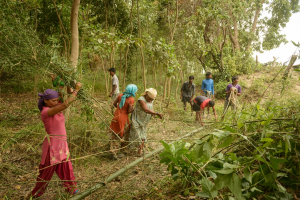
Protecting, restoring and enhancing nature can be a powerful tool for adapting to climate hazards and building resilience. Healthy ecosystems and biodiversity help absorb and mitigate impacts of natural hazards such as floods, storms or heatwaves while generating economic co-benefits such as resources to support sustainable livelihoods, improved ecosystem services such as soil, water and air quality, and improved human health.
The Zurich Climate Resilience Alliance aims to improve awareness and understanding about the benefits and co-benefits of nature-based interventions for adaptation and resilience, capture evidence of practical, community-led and impactful interventions, and advocate for the broad adoption of nature-based interventions at local community, country and global level.


