
Every April, as a new school year begins across Nepal, thousands of students walk into classrooms made unbearable by extreme heat. On this International Youth Day, Practical Action’s Suman Chapagain reminds us that resilience is built not simply by protecting young people, but by empowering them with knowledge, technology, and partnerships to become leaders of climate resilience.
When summer becomes a crisis for schools
What was once a pleasant summer has now become a season of extreme temperatures. Between 2020 and 2026, several years have experienced record-breaking heat, with 2024 recorded as the hottest year on record. Several days during these years recorded temperatures exceeding 40 Degree Celsius across parts of Nepal. Classrooms with tin and concrete roofs trap the heat, turning learning spaces into sweltering rooms where students and teachers struggle to concentrate.
As temperatures continue to rise through May and June, attendance declines, learning is disrupted, and local governments are forced to shorten the school day, adjust schedules, or temporarily close schools following heat advisories from the Department of Hydrology and Meteorology.
When outdoor temperatures rise above 40°C, fans in classrooms and drinking water are not enough. Every year, schools and local governments must suspend classes to protect students and teachers. We have seen this happen more frequently in recent years, yet we are still missing something in our efforts to cope with extreme heat because it is everywhere.
Mr. Tek Bahadur Kshettri, Principal, Jana Jagriti Secondary School, Rajapur Municipality.
Schools in hotter regions have introduced fans, safe drinking water, and temporary changes to school hours to cope with heat. However, these efforts no longer appear sufficient.
Mr. Kshettri’s words capture a broader challenge faced by school teachers and students. As climate hazards intensify, conventional coping measures alone can no longer ensure safe and conducive learning environments. Schools now need innovative, climate-resilient solutions that ensure continuity of education during extreme summer temperatures.
Making schools safer and cooler learning spaces
In 2025 and 2026, the Climate Resilience Programme, supported by the Zurich Climate Resilience Alliance, implemented by Practical Action with BEE Group and PESWAN, piloted heat-reflective roof paint in 15 schools. The heat-reflective coating was evaluated using temperature and humidity sensors installed in painted and non-painted classrooms and outdoors to assess its impact on indoor thermal comfort. The pilot demonstrated measurable improvements in classroom thermal comfort; painted classrooms remained around 2°C cooler during the monsoon, and over 5°C cooler during the hottest summer.
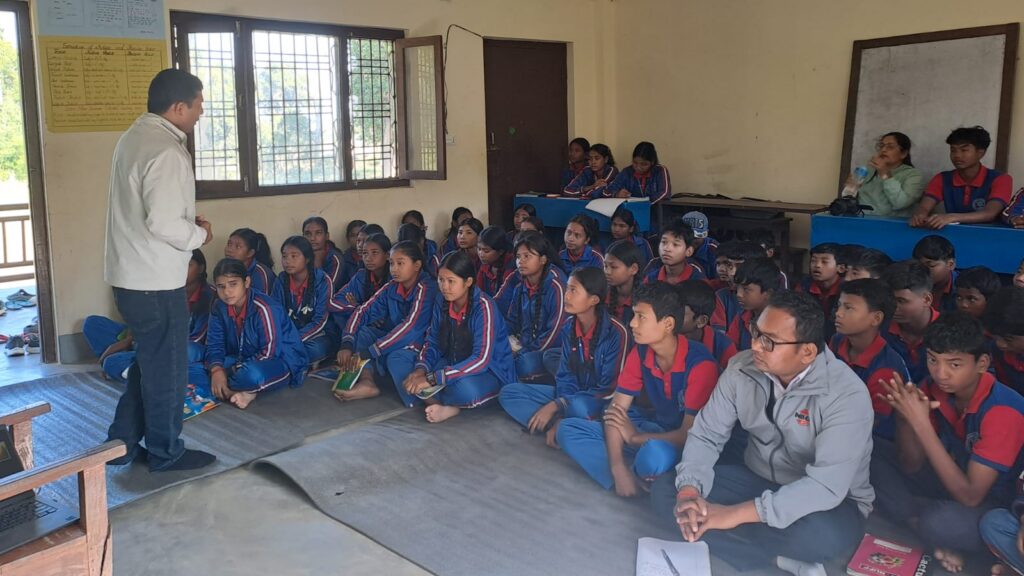
Beyond cooling classrooms, the initiative has transformed schools into living laboratories for climate resilience. In five schools in Kanchanpur, temperature and humidity sensors were installed, and students in Grades 8-10 received heatwave awareness training. Across 15 schools in Bardiya, Kailali, and Kanchanpur, students record daily temperatures and share their observations with families and neighbours, helping communities better understand the growing risks of extreme heat.
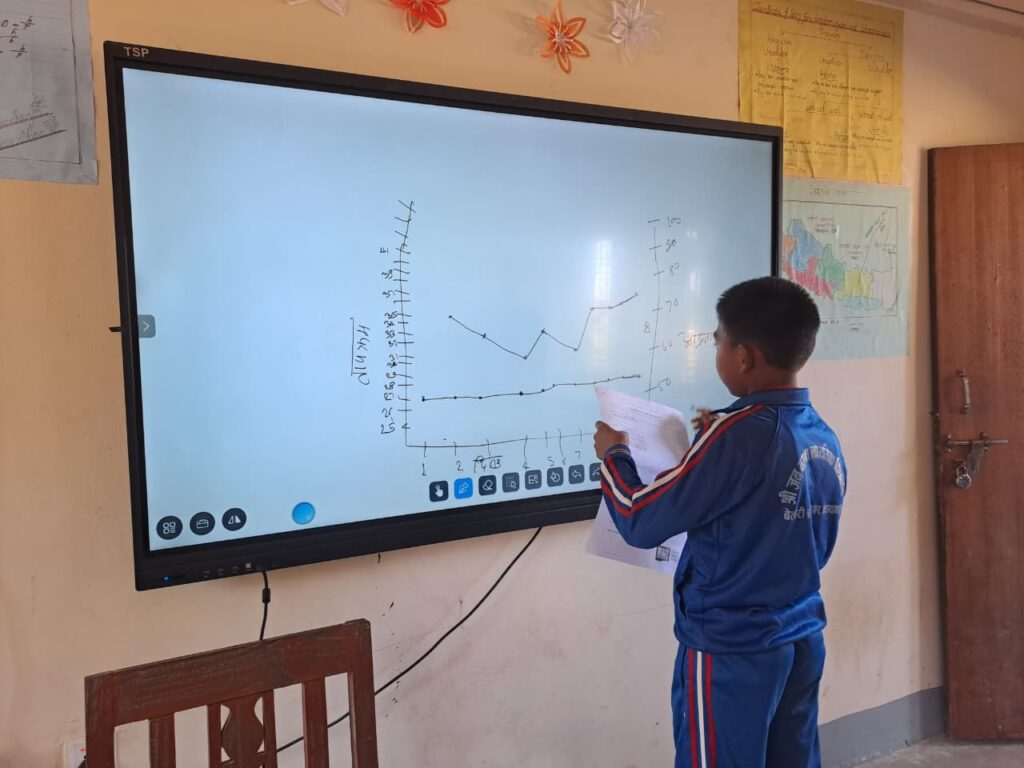
At Panchakriti Baijanath Secondary School, teachers incorporate real-time temperature records into science, social study and environmental education, making climate change tangible through students’ own observations.
When consistently increasing temperatures were observed, the school repaired and added fans to classrooms. The same data now helps inform decisions on adjusting school schedules or recommending ‘heat holidays’ during extreme heat. In this way, students are no longer just experiencing extreme heat; they are using technology to understand, communicate and help their schools adapt.
The next generation of resilience actors
These experiences reinforce an important lesson: education is one of the most effective long-term investments in climate resilience. The Alliance’s Climate Resilience Measurement for Communities (CRMC) framework recognises education, knowledge, and awareness as key building blocks of community resilience. At least 14 indicators in the framework are directly related to education, including school attendance, continuity of learning, and the integration of disaster risk reduction and climate change into education.
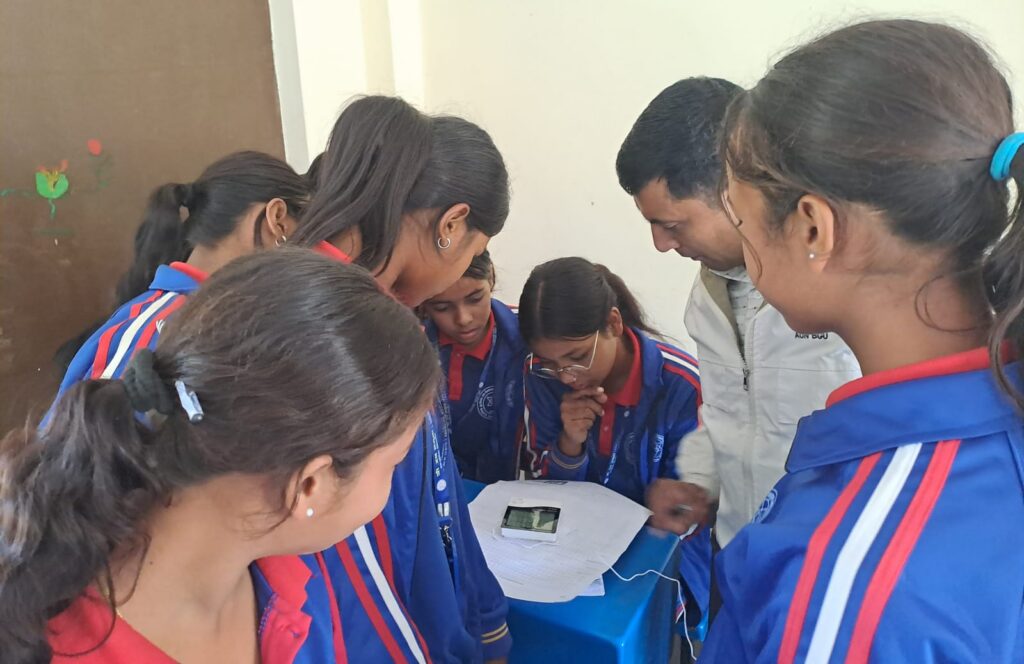
By collecting and interpreting environmental data, participating in School Disaster Management Committees, and applying classroom learning to real-world challenges, students are developing analytical, leadership, communication, and problem-solving skills. These experiences are transforming them into active contributors to climate resilience, and the next generation of leaders.
This International Youth Day, let us commit to supporting young people to advance climate resilience through innovation, technology, and partnerships that strengthen communities today and for generations to come.
This blog is based on the field insights from Bhoj Singh Khadka (Program Coordinator, PESWAN Kanchanpur), Hemanta Raj Joshi (Project Coordinator, BEE Group), School Principals, and the team members from Practical Action, PESWAN, and BEE Group.
Comments