
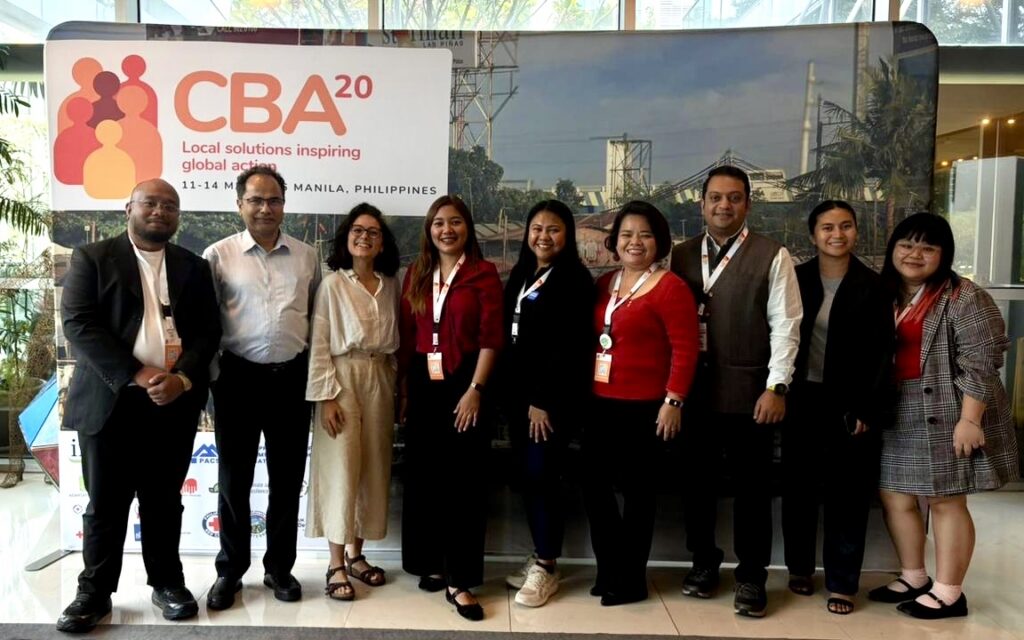
The 20th International Conference on Community-Based Adaptation to Climate Change (CBA20) in Manila brought together over 400 participants from 67 countries, providing a powerful snapshot of where climate adaptation is heading, and what still needs to change. Across sessions, one message stood out clearly: locally led adaptation (LLA) must become the norm, and that can only be achieved through significant shifts in power, financing and action.
From the opening plenary, the tone was set with a strong emphasis on solidarity. Speakers highlighted that resilience cannot be achieved without addressing the realities of informal settlements and marginalized communities, particularly those exposed to floods, extreme heat, and insecure living conditions. Crucially, resilience was framed not just in terms of infrastructure, but in terms of safety, agency and dignity.
This people-centred framing persisted throughout the conference. A recurring theme was that communities are not passive recipients of aid, but leaders, innovators, and knowledge holders. The challenge is not identifying solutions; it is delivering the ones that those affected by climate hazards already recognize.
The vision is clear. The roadmap is in place. How do we bring policies to life? How do we translate them into actions?
Atty. Romell Antonio O. Cuenca: Deputy Executive Director, Philippines Climate Change Commission
Engage at the local level, always
A key barrier lies in how knowledge is generated and used. Multiple sessions stressed the need to move away from extractive, top-down research toward co-design and co-creation. As the Alliance has seen in our work around the world, adaptation efforts are most effective when scientific knowledge is combined with lived experience, ensuring that climate data connects meaningfully with local realities.
This was particularly evident in discussions on urban resilience; In many cities, especially in developing countries, existing datasets fail to capture conditions in informal settlements. One example shared was the use of community-operated thermal drones and low-cost sensors to map heat exposure in Freetown, Sierra Leone. By marrying scientific tools with community-level insights, stakeholders produced the first detailed heat maps of informal settlements, and by doing so demonstrated how taking a more inclusive approach can directly inform planning and save lives.
One of our own contributions highlighted how extreme heat affects different population groups in Nepal, including the elderly, pregnant and lactating women, and other vulnerable communities. We have been working closely with local governments to develop Heat Action Plans, outlining both immediate mitigation measures and long‑term adaptation strategies to minimize, avert, and address heat‑related risks.
Integrate climate adaptation into existing systems
The impact of climate hazards is increasingly recognized as a public health crisis, particularly as extreme heat disproportionately affects the most vulnerable. Sessions on health at CBA20 highlighted the need to embed adaptation within local health systems, supported by community engagement, anticipatory action, and flexible financing. Similarly, water governance discussions emphasized the shift from centralized systems to decentralized, community-driven models that improve equity and sustainability.
It’s a similar story for Nature-based approaches which, while widely promoted, vary in effectiveness depending on how they are implemented. As well as being community led, it must also be seen as part of broader governance and livelihood systems. When linked to land rights, social inclusion, and local stewardship, they deliver stronger and more lasting resilience outcomes.
Access to finance must improve
Financing emerged as one of the most critical—and complex—challenges, especially when it comes to getting resources to the local level. CBA20 participants repeatedly noted that the issue is not always the absence of funding, but often the lack of accessible and flexible mechanisms. Traditional funding structures are typically too slow, rigid, and centralized to support community-led action.
Innovative approaches such as parametric insurance and blended finance models were discussed as potential solutions. However, the deeper issue is structural: financing systems must shift from being institution-centred to people-centred. This includes simplifying access, devolving decision-making, and supporting small-scale, locally managed funds. Community-generated data and tools like the Climate Resilience Measurement for Communities (CRMC) are increasingly important in making adaptation efforts visible, credible, and fundable.
Decentralize decision-making
Closely tied to financing is the question of power. Across multiple sessions, participants emphasized that LLA is fundamentally about shifting decision-making authority to communities – and this is seldom easy.
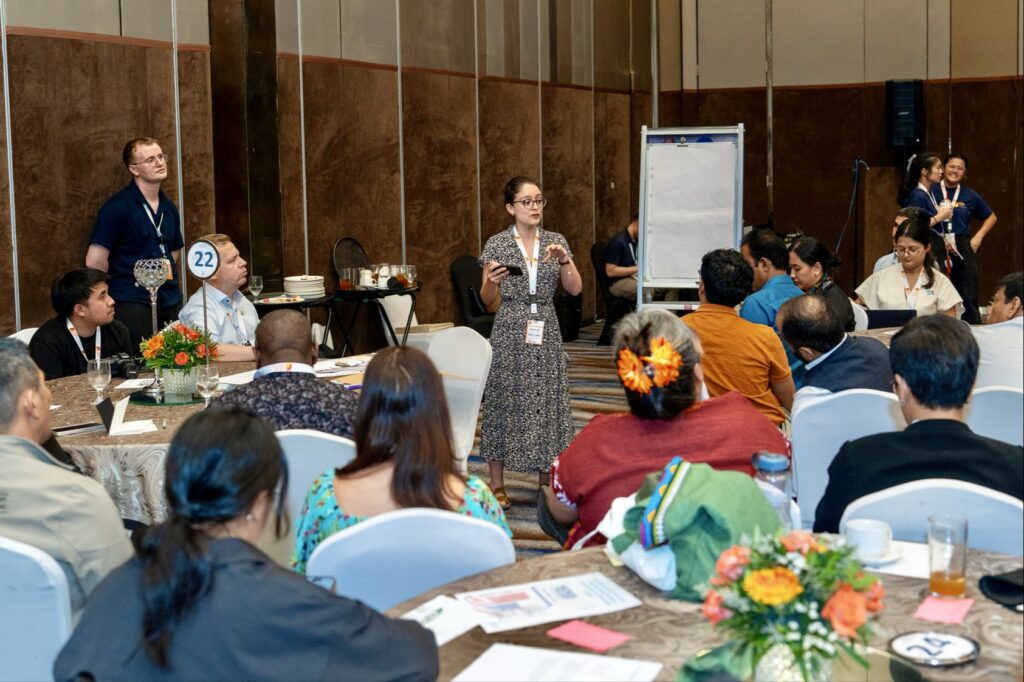
Institutional structures, donor requirements, and governance systems often reinforce centralized control. During the workshop event hosted by the Alliance, it was pointed out that despite several examples of communities taking the lead on individual projects, cementing this approach within national systems remains a major challenge. Meaningful progress on this issue will require a significant mindset change.
Where next for climate adaptation?
Looking ahead, it will be vital to connect the practitioner insights abundant at CBA20 with global policy processes, particularly UNFCCC negotiations. Bridging this gap is essential to ensure that international frameworks reflect the realities that communities face every day.
Ultimately, CBA20 reinforced a clear direction for robustly-financed climate adaptation. Locally led adaptation works, but only when the systems around it support it. This means building trust, investing in long-term local capacity, redesigning financing mechanisms, and transferring power to communities.
Visit our CBA20 event page to find out more on the Alliance’s participation.
Comments