
In Bangladesh, climate-related hazards such as floods and heatwaves have become more unpredictable. When they occur successively or simultaneously in the same place, the impact on those affected can be catastrophic and disaster risk management practices often cannot deal with such events. Shifting from traditional single-hazard approaches to more integrated strategies is urgent.
How interconnected hazards amplify disaster impacts
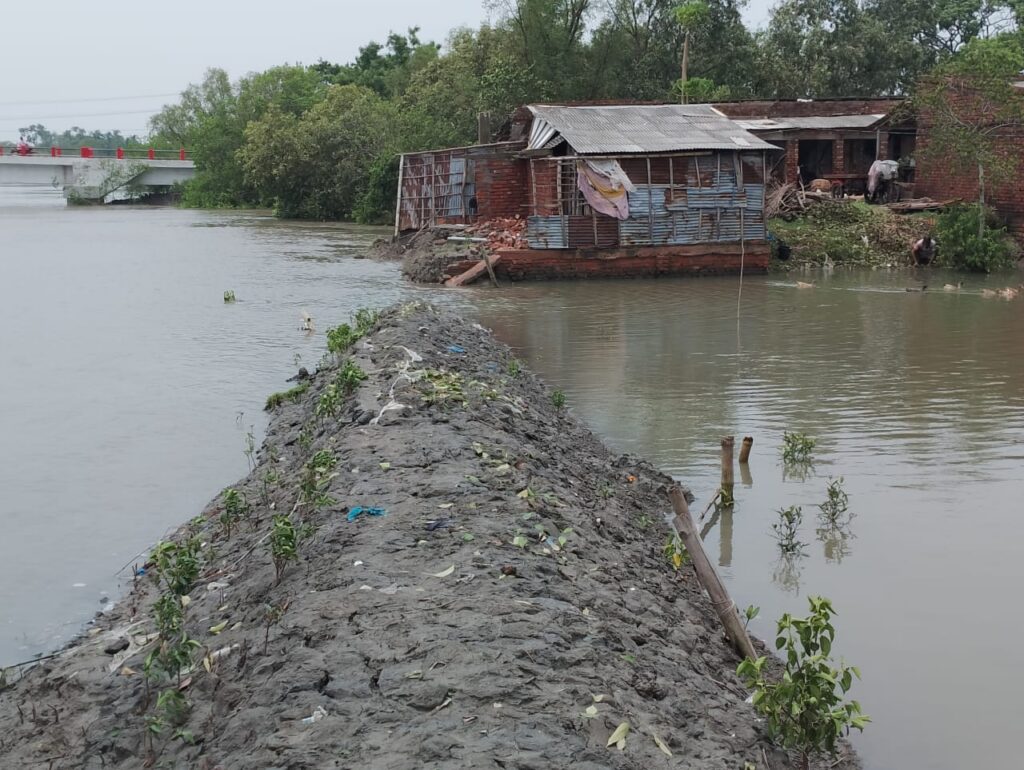
Behind every extreme weather event in Bangladesh lies a web of interconnected, cascading risks compounded by multiple triggers. Cyclones bring strong winds, torrential rain, and floods that swallow entire communities. The winds destroy vital infrastructure, while seawater rushes inland, devouring farmland and eroding embankments. Transportation is disrupted, water sources are contaminated, and displacement occurs.
When a heatwave immediately follows, the impact is much more severe than if it had happened individually. Families already struggling after a flood are then faced with weeks of unbearable heat. Crops that survived the storm can be burnt by the sun. People lose income, and with no savings left, they become even less prepared for future extreme events.
We don’t get a chance to breathe before the next disaster comes. A storm surge washes away our crops, and before we recover, the heat burns what little is left. How long can we survive like this?
A farmer from Satkhira
Bangladesh knows this reality all too well. Several climate events of 2024 highlighted how interconnected multiple hazards can be and how social and economic factors influence the impacts on communities. That year, the country first endured a month-long severe heatwave, with temperatures exceeding 42 degrees Celsius in some areas, shortly followed by devastating widespread floods caused by Cyclone Remal and placing immense strain on the national disaster management system. This double blow shook the economy, environment, and everyday life simultaneously, highlighting how one event can magnify the impacts of another.

Beyond nature: Are we making things worse?
The risks of floods, heatwaves and cyclones are not cascaded by the hazards alone. Unplanned urbanization in Bangladesh has drastically altered natural drainage systems, replacing permeable land with concrete and preventing excess water from seeping underground. Many coastal areas still lack well-developed flood action plans – and where plans exist, they often overlook local knowledge, green infrastructure, or multisectoral approaches. As a result, gaps emerge between local authorities and marginalized people, leaving their suffering, needs and indigenous practices unheard.
An analysis of resilience to climate shocks, conducted by Practical Action in 2024-25, using the Climate Resilience Measurement for Communities (CRMC) tool in Burigoalini union, Satkhira- (a hotspot for cyclones, storm surges, high tides and riverbank erosion)- clearly reflects these systematic gaps.
The assessment found that despite high flood vulnerability, there is no well-developed flood risk reduction plan and no trained disaster response staff; volunteers and elected members step in during emergencies where training and resources remain insufficient.
Floodwater fills natural drainage systems with waste, causing damage to transportation systems, unreliability in fuel supplies, and forcing cell towers to go offline, leaving communities disconnected from critical information. Over 90% of families were unaware of flood insurance as an alternative risk financing mechanism for covering unexpected shocks, and fewer than 20% of local businesses have plans to reduce losses or continue operations during floods.
During heatwaves, communities have no risk reduction or response plan in place and no system to monitor the effects on health or livelihoods. Households are left with high energy costs and limited access to water, and protective resources. Nearly 99% of workers reported feeling unprotected during extreme heat, and less than 20% of households have measures in place to reduce their exposure to heat.
Although forecasts and warnings exist, local authorities rarely know how to act on them. As a result, communities face repeated disruptions to work, income, and daily life.
Redesigning risk management to meet the realities of compound hazards
To prepare Bangladesh for the increasing impacts of climate hazards, existing risk management practices require fundamental shifts to ensure that compound events and cascading risks are considered in development plans and policies.
As reflected in the Alliance’s report on addressing compound flood and heatwave risks, the conventional pattern in Bangladesh of single hazard-based actions should be reformed into a multi-hazard approach, starting with improved Early Warning Systems.
With support from Practical Action, early warnings are shared through localized voice messages, digital weather boards, Disaster Alert for BD app, and trained Local Resilience Agents. This helps ensure that even remote households still receive timely warnings.
Emergency planning must also ensure that essential services such as communication, water, health, and transport remain operational during crises, supported by clear locally appropriate Standard Operating Procedures or Action plans for multi-hazard situations. To make alerts more location-specific and impact-based, Practical Action is integrating the Dynamic Flood Risk Model in Faridpur, developed by the Institute of Water and Flood Management, Bangladesh University of Engineering and Technology. This model generates village-level risk scores that can be translated into flag-based warnings, allowing communities to quickly understand their risk level and take early action.
See our country page for more details on Practical Action’s work in Bangladesh.
Comments