
Through long-term engagement in community programming, urban and rural communities at risk of floods and wildfires in Bolivia are now experiencing the benefits of shifts in Disaster Risk Management (DRM). Practical Action’s Leon Lizon explains how taking this approach has delivered sustained improvements to resilience across Tacana.
Working with partner organisations in the Victoria Regia consortiom has allowed us to support the Tacana Indigenous Council (Consejo Indígena de Pueblos Tacana – CIPTA) for many years, and recently we were able to create roles with specific responsibility for DRM. For example, establishing a Risk Management Unit, introducing the “Women That Teach” initiative and establishing community brigades in Puerto Yumani. The strong relationships that we have developed through this have really shown us the importance of having good, honest partnerships when working towards the same goal.
Creating stability in a changing system
Getting to this stage hasn’t been easy. Due to local regulations in Tacana, authorities only have a term of one or two years, meaning that personnel in the communities and municipality are often rotated. This then impacts the training and strengthening of DRM issues. When people leave their roles and a new person comes by, it often feels like starting over.
We’re working with communities and authorities to put sustainable structures in place to minimise the impact of this. For example, the person responsible for Disaster Risk Reduction (DRR) for the entire Tacana territory will also be the vice president of the board, regardless of which administration is occupying the position. We also work collaboratively on key documents, plans and manuals for these roles, so the work can be carried out regardless of who occupies it.
Quick actions leading to big impact
In 2023, CIPTA established a Risk Management Unit, covering 21 communities at the indigenous territory level, which coordinate with the municipal level. Across Tacana, DRM-specific positions were established in fifteen communities, signalling the strong intent to view disaster risk as an ever-present concern that must be adequately resourced. The good relationship that we have with the communities allows us to have written mandates in place from the territory’s directory, so that all communities can define their own DRR responsibilities.
A particularly memorable moment for me was during a visit to Puerto Yumani where we were joined by a DRR official of the municipality. In a meeting with the community authorities, we were discussing the need to expand a flood shelter that was already present in the community. The official mentioned the availability of some funds for the municipality and, following on from the support of Practical Action, the community decided to use their own funds as well. This led to the expansion of the existing flood shelter just days after, as well as the implementation of a brand-new shelter with a concrete base that allows for stronger, more durable protection against floods.
When the decision to integrate DRR into the Indigenous Council was officially made, this meeting was quite brief and so it’s eye-opening to see how just a few minutes can shape decision making which then goes on to have such a big impact.
Women play a key role in decision-making processes
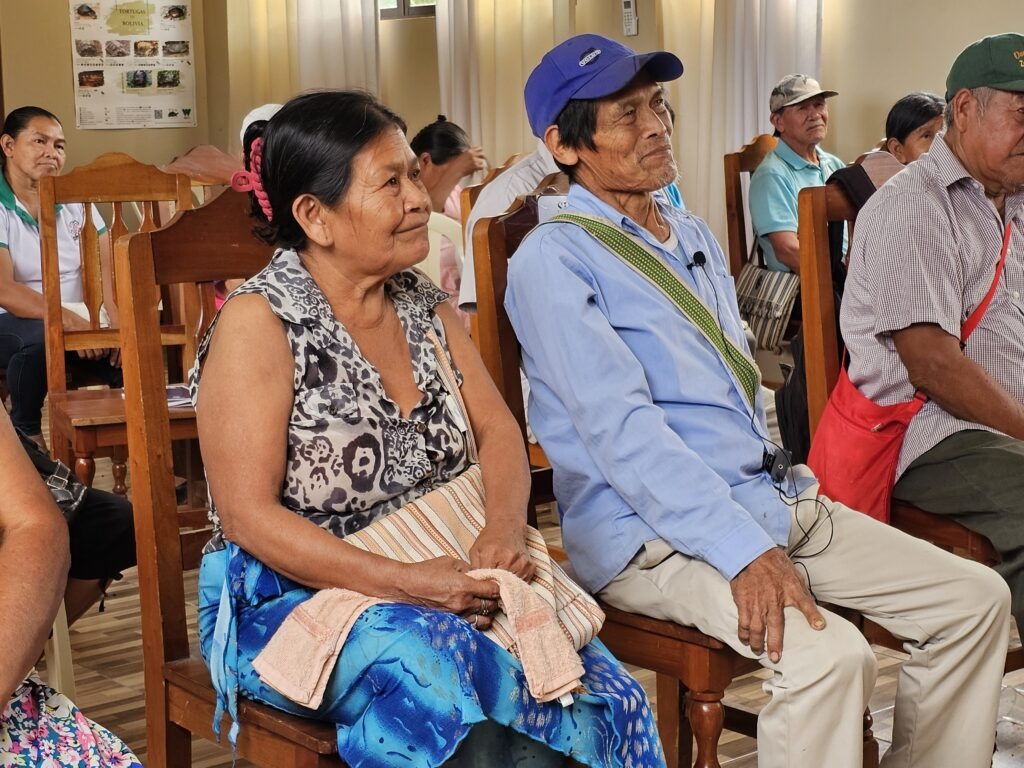
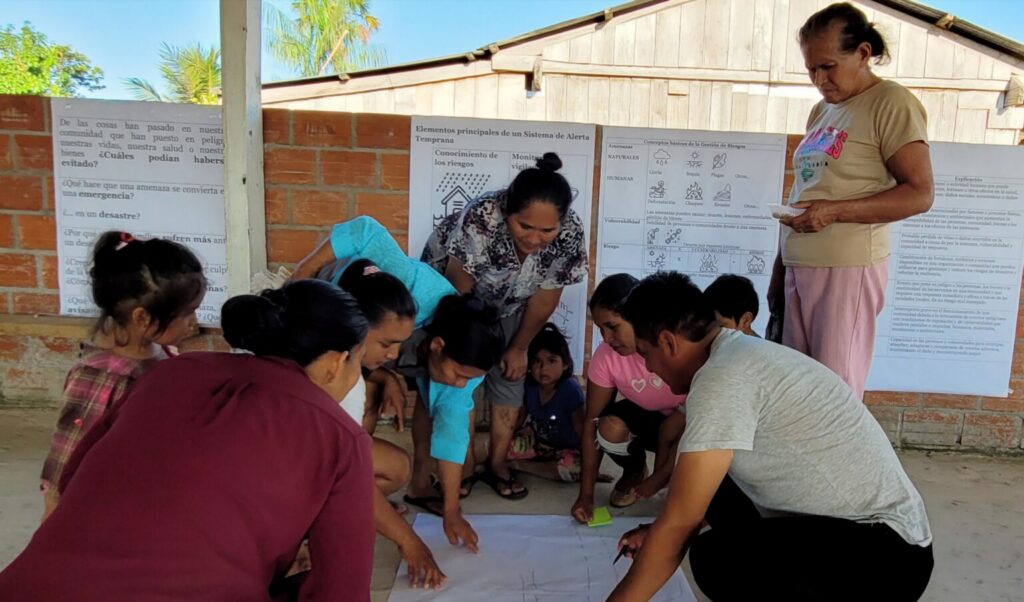
Working with the authorities of the Indigenous Territory and shaping the experience of the “Women That Teach” initiative has been great to see. The initiative provides safe spaces for women to share their experiences and understanding of resilience, disaster risk management and Early Warning Systems, encouraging them to become active participants in disaster risk and resilience education across the territory.
Many people now in DRM-specific positions are women, a demographic that previously was not considered able to participate in the decision-making process. As awareness grew of women’s abilities, strengths and understandings of needs during a disaster, so too did their involvement. Through our work with communities as part of the initiative, women are also sharing their indigenous knowledge of flood risk indicators with neighbouring communities, further increasing the potential for long-term resilience.
Achieving sustainable change
The impact of taking a long-term approach to community programming is huge. Communities are constantly facing climate threats, so working to improve the capacities of prevention, preparedness and climate resilience in general make a big difference. As a response to the 2024 and 2025 flooding in Puerto Yumani, community brigades mobilized and enacted pre-prepared contingency plans, immediate life-saving actions and post-flood damage assessments. Initially trained to respond only to floods, they’re now applying similar approaches to addressing wildfires by receiving and providing firefighting training, communicating information about wildfires, and monitoring heat sources.
Creating changes in attitudes and systems will ensure that these changes are sustainable in the long run. Working alone may often be quicker, but working together alongside communities and institutions is what achieves greater results.
You can learn more about the Alliance’s work in Bolivia here. Take a look at our ‘Action to Impact’ digital report to read more impact stories from the Alliance.
Comments