
Identifying opportunities to replicate successful interventions is a highly effective way to deliver climate resilience at scale. Mercy Corps’ Sanjit Shrestha, who has worked as a Province Coordinator for the Alliance programme since 2024, explains how it happened in Nepal.
Nepal has developed a well-rounded policy and legal framework to integrate Climate Change Adaptation (CCA) and Disaster Risk Reduction and Management (DRRM) into its planning and budgeting processes. For example, the country’s Disaster Risk Reduction Strategic Action Plan (2018–2030) requires each development sector, such as agriculture, health, and infrastructure, to allocate at least 5% of its annual budget for DRRM. However, in practice that is not always delivered.
Building the evidence base for action
Earlier in the Alliance programme, Mercy Corps developed a budget-tracking methodology, which revealed gaps in the allocation and availability of funds for CCA and DRRM interventions. The findings were presented in Sudurpaschim Province, and resulted in a 5% budget allocation towards DRR/CCA at the municipal and provincial level. The adoption of a fixed percentage represents a practical and measurable way for provincial governments to increase protection against threats posed by floods, heatwaves and other climate hazards.
During this process, it became clear to us that it could be replicated. If other local authorities were to adopt it, the approach could be scaled up to reach many more people.
From pilot to scaling
Our budget-tracking activities – including extensive analysis by Oxford Policy Management – revealed that DRRM and CCA was similarly under-resourced in Madhesh province. Alongside our evidence of spending gaps, we were able to point to the example of how another province had successfully allocated 5% of its budget to resilience-building activities. Informed by this example, Madhesh Province also committed to allocating at least 5% of its sectoral budgets DRRM and CCA, representing the first replication of the earlier success.
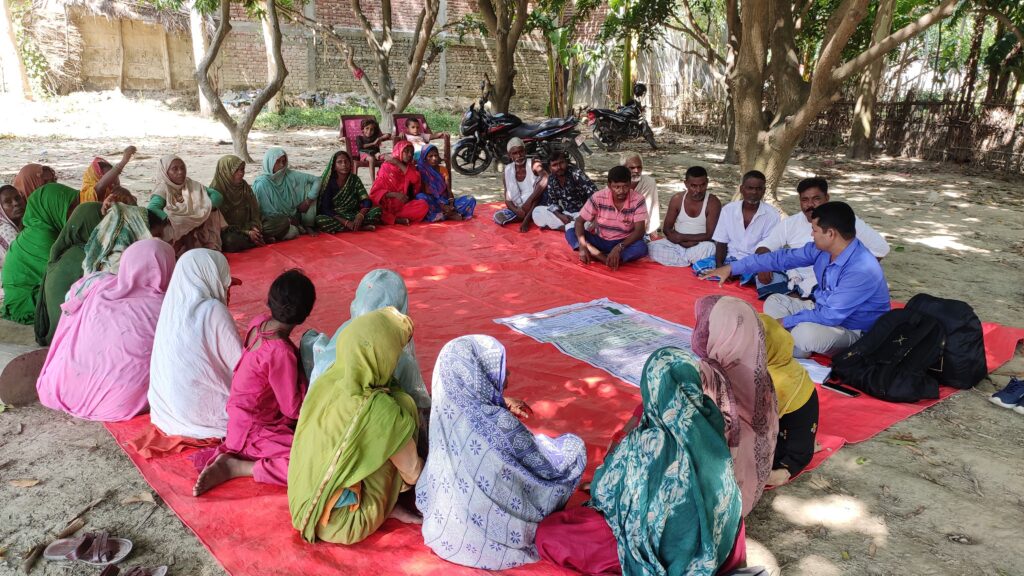
The community aspect
Of course, turning the evidence into action requires deep engagement from multiple stakeholders. To that end, Mercy Corps conducted a series of consultation meetings and workshops on budget allocation, mobilization of political champions, and knowledge-building sessions on national policy provisions for DRR budget allocations.
We also leveraged the findings of the Climate Resilience Measurement for Communities (CRMC) process, which identifies the needs and priorities of communities with regards to climate adaptation and resilience-building. These findings helped us to influence government authorities, elected representatives and parliamentarians at the provincial and local levels of the need to allocate funds towards DRR and CCA.
Partnering with others for greater reach
The scalability of this approach was further demonstrated in November 2025, when Oxfam International Nepal adopted Mercy Corps’ budget-tracking methodology in other areas of the country.
Mercy Corps conducted a validation workshop on the methodology, tools and findings of the study with civil society organizations and development partners. Oxfam were among the participants, and expressed an interest in conducting a similar study, and are now generating comparable data across diverse geographic contexts, broadening the national evidence base.
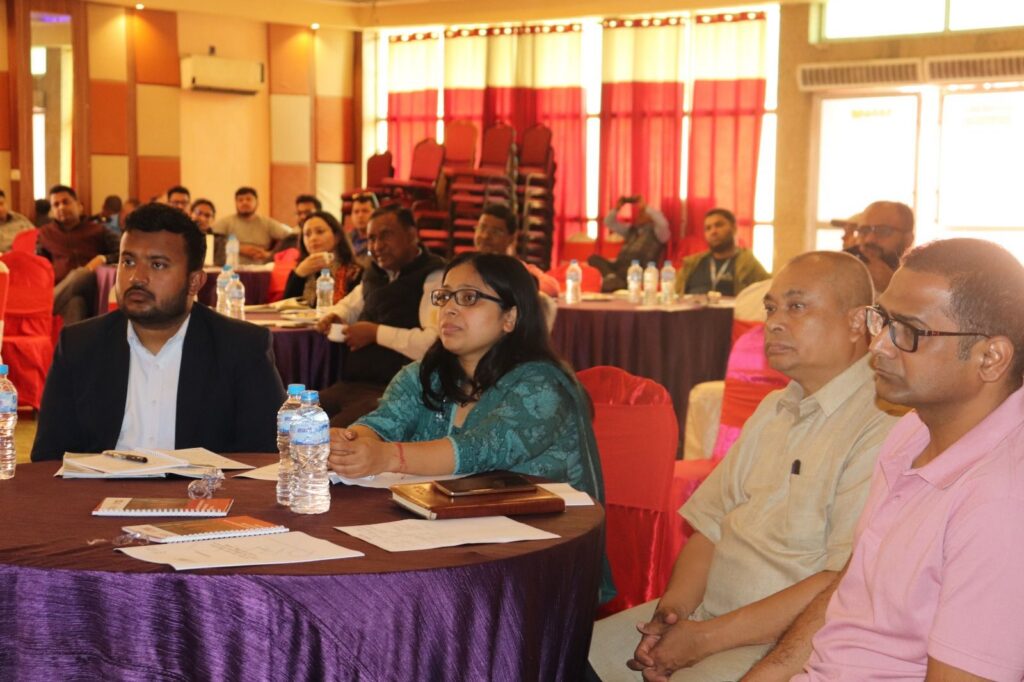
The two teams continue to share their knowledge and experience in pursuit of their aligned objectives. By openly validating and sharing its methodology with civil society and development partners, Mercy Corps has transformed a successful provincial reform into a nationally replicable model.
The budget tracking tool developed by Mercy Corps Nepal is one of the most recent and effective tools currently available. Therefore, at Oxfam, we chose not to develop a new tool and duplicate existing efforts. Instead, we focused on strengthening and enhancing the use of the existing tracking tools.
Bibek Karki – Program Coordinator, Climate and Resilience, Oxfam
What’s next
Conducting a budget-tracking study was new to me – but our work in Nepal has shown that a phased approach can ensure that successful interventions can be significantly scaled up.
By beginning with a successful pilot, and ensuring that the evidence it generated was able to reach key audiences, the stage was set for scaling – both in our own work as we continue to influence DRR budgets in other areas of the country, but also via trusted partners. It’s definitely something we’ll continue to explore across the Alliance.
The team in Nepal is currently tracking the budget across three provinces. With Sanjit leading the work in Madhesh Province, the preliminary findings indicate that commitments have already been translated into action across several sectors.
You can learn more about the Alliance’s work in Nepal here. Take a look at our ‘Action to Impact’ digital report to read more impact stories from the Alliance.
Comments